
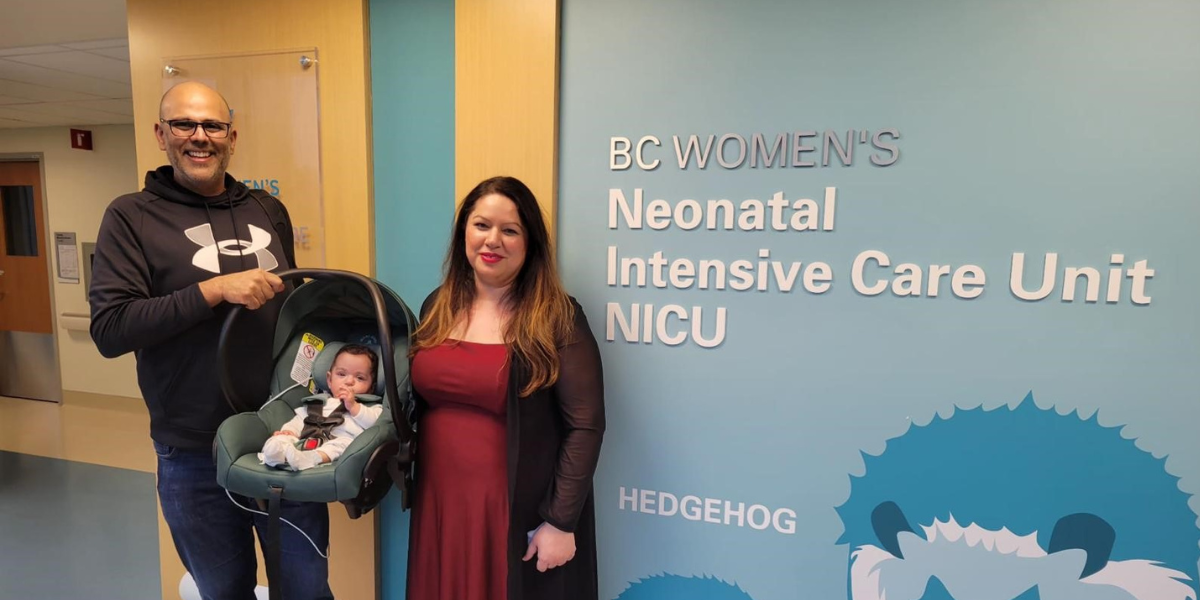
“The moment when we transferred our newborn daughter to BC Women’s NICU, we knew our baby was going to be ok.”
Ten years after their son was a patient in the BC Women’s NICU, Sachin and Ritu Varma faced a life-and-death decision with their infant daughter, Kayra. They requested a transfer to BC Women’s NICU, knowing she would be in the best hands possible.
About halfway through a smooth pregnancy, Ritu Varma’s water broke, and suddenly, everything changed. She and her husband, Sachin, rushed to the nearest hospital and were told that the pregnancy would not be viable unless she could carry her baby for another 8 days. Ritu was monitored carefully over the next 8 days in the hospital until the 23-week mark of her pregnancy.
“When our daughter was born, she was breathing on her own, which was good, but she was so very small, only 532 grams at birth. The next day, her weight was 440 grams,” recounted Ritu. Their baby was in the NICU. “We couldn’t touch her or hold her. But we felt positive, and after six days, she seemed to be doing a bit better. On the seventh day, we decided to bring our oldest child to come and meet her.”
When they arrived at the hospital, they were told an infection was brewing and their baby’s intestines had perforated, causing bile to leak into her stomach. “We were told we could hold her and that they would make her comfortable. We were devastated.”
But Ritu and Sachin weren’t ready to give up. They discussed the possibility of transferring their daughter, Kayra, to BC Women’s. The doctor warned that Kayra might not survive the transfer, but the Varmas felt they had nothing left to lose. Because they couldn’t both travel the 20-kilometre trip with their baby, they made the painful decision to go on their own and meet her at BC Women’s.
“The three gentlemen on the transport team were so compassionate and caring. They promised us they would get Kayra safely to BC Women’s,” recalled Sachin tearfully.
At BC Women’s NICU, they were met by a team of approximately 16 nurses and doctors. Kayra’s surgeon took them aside to explain the procedure they were planning. “It was overwhelming and super emotional,” said Ritu. “But it was also very reassuring to know we were in the best place we could be.”
Over the weeks and months that followed, Kayra required seven surgeries related to the perforation in her intestines and remained in BC Women’s NICU throughout her recovery. “After three weeks, Ritu was finally able to hold her, but I was afraid, she looked so fragile. Finally, when she was about a month old, I held our baby for the first time,” said Sachin.


During their 252-day stay in BC Women’s NICU, the Varma family was consistently supported by the compassion and care of the doctors, nurses, and staff. “Everyone was just amazing,” said Ritu. “Over the months in the NICU, there was progression and there were setbacks. She needed multiple intestinal surgeries, had breathing issues, and struggled with her body temperature. But the hospital was so supportive, they reviewed every step in great detail to advise and reassure us.”
Sachin added, “The level of care was outstanding. It takes special people to care for babies in the NICU, and they are truly remarkable — from the doctors and nurses to the therapists, and everyone who supported us, from cleaning the rooms to valeting our car when we were rushing in to see Kayra. Being able to sleep in the room with our baby made things so much easier. We just can’t say enough about the BC Women’s NICU, and we can’t say thank you enough to everyone on the team.”
Kayra turned two this July. While she’s still catching up on her milestones and continues to return to the hospital for regular checkups, she’s thriving. “This would not have been possible without the support we received — and continue to receive,” said Ritu. “That’s why we’ve become such enthusiastic supporters of BC Women’s Health Foundation. We are eternally grateful for the love, care, and compassion we and so many other families have experienced at BC Women’s NICU.”

Stories like Kayra’s remind us why ongoing investment in neonatal care and women’s health research matters.