
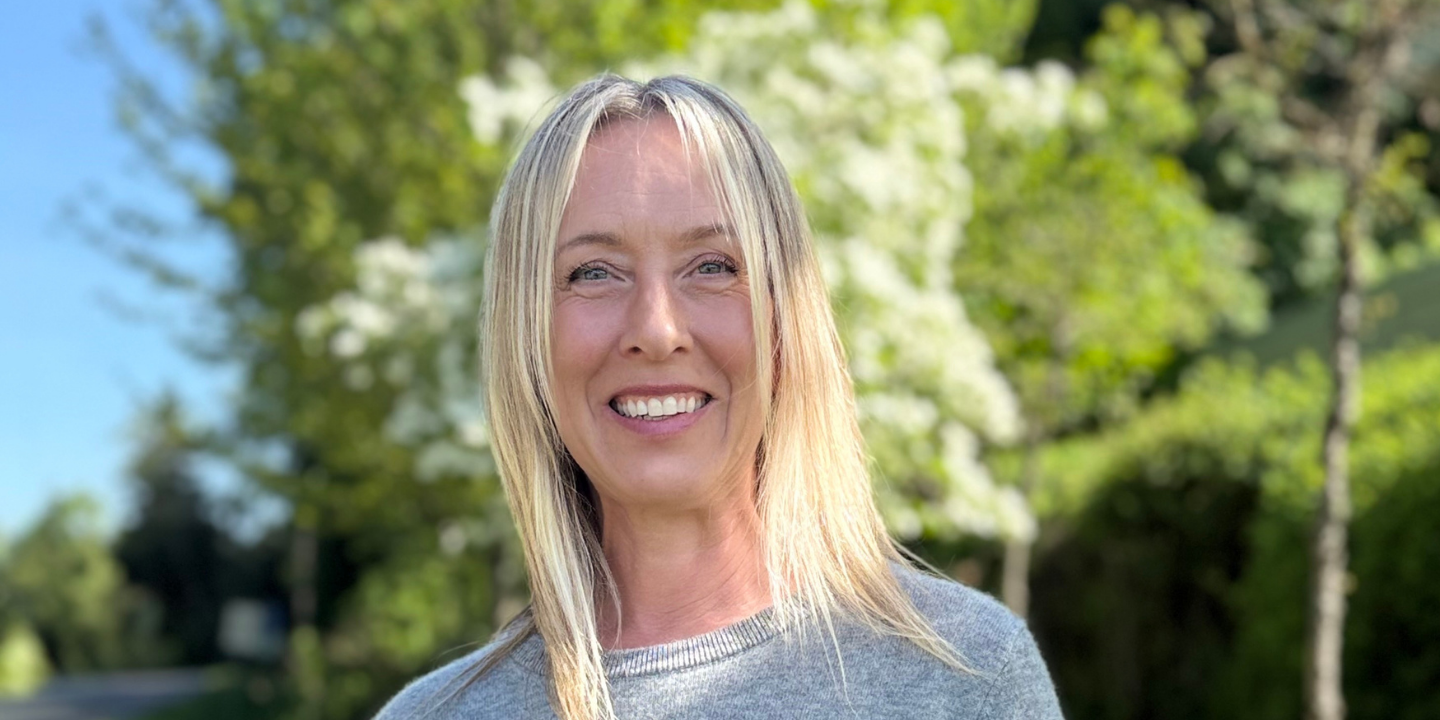
“My story is not unique, which is why I want to share it,” says Sue. “So many women are struggling with menopause symptoms at a vulnerable time in their lives. In my experience, science-backed research and information, options for symptom relief, and honest conversations with other women have made a world of difference.”
BC Women’s Health Foundation, in partnership with BC Women’s Hospital + Health Centre and the Women’s Health Research Institute (WHRI), is funding evidence-based menopause resources — including webinars, research, and expert guidance from doctors, researchers, care providers, and patients — that are freely available online to everyone. Because no woman should have to navigate menopause alone and without access to facts they can trust.
Unfortunately, when Sue, a mother and schoolteacher from Vancouver Island, began her menopause journey, reliable menopause information was hard to come by. “I was in my late 30s and didn’t know what was happening. I just knew my body was changing,” Sue recalls. “I had sleeplessness, mood swings and irregular periods that I chalked up to stress. A young family, full-time work. Through that lens, it made sense.”
Nearly all women will experience menopause-related symptoms, and one in every three women is going through menopause right now. Yet, even today, care remains inconsistent and stigmatized. BC’s first province-wide menopause study, HER-BC, surveyed more than 2,000 midlife women and found that nearly 92% experienced at least one symptom at a moderate to severe level.
As Sue moved through her 40s, her symptoms intensified. Along with hot flashes and night sweats, she experienced heart palpitations, GI issues and recurring bladder problems. “As women, we learn to cope and readjust. We push through and normalize changes in our quality of life.”
As Sue approached 50, she found herself living with constant uncertainty about what symptom might appear next. “On more than one occasion, I was sent to Emergency for an ECG to rule out cardiac concerns.”
Menopause is more than hot flashes and night sweats. It can lead to serious health conditions that can impact cardiac function, bone density and cognitive health, among other things.
Sue’s family doctor ordered multiple tests and blood work. She had cardiac workups for heart palpitations, saw a gastroenterologist for GI issues, and frequented walk-in clinics for recurring bladder issues. Her doctors were diligent, but no one was connecting the dots. “Looking back, I had symptoms for over a decade that I couldn’t connect. I didn’t even know the word ‘perimenopause’ because no one was talking about it.”
Thank goodness the conversations around menopause are changing, “because women shouldn’t have to build the plane while they’re flying it,” says Sue.
THE CAREER IMPACT OF MENOPAUSE
It was only a matter of time before the unpredictability of Sue’s symptoms began to affect her professional life. “I didn’t know if I was going to have a full night’s sleep, if my stomach was going to be off, or if I’d have another UTI,” she recalls. “My health became paramount and that did impact my career.”
Sue made the decision to scale back from full-time teaching to part-time to better manage her health, which meant giving up other priorities, including her career.
As many as 10% of Canadian women leave the workforce entirely or pass on promotions due to unmanaged menopause symptoms, often at the height of their careers. According to the 2024 WHRI HER-BC Study, 32% of participants said menopause symptoms affected their job in some way, including missing days of work and cutting back hours, and 9.4% reported turning down a job promotion or career advancement opportunity due to menopause symptoms.
SUE’S TURNING POINT
Through casual conversations with friends and colleagues, Sue came to realize she wasn’t alone with her symptoms. Hearing other women say things like, “oh me too,” and “I’ve also been feeling that way,” gave her the confidence to dig deeper in her search for answers.
Her breakthrough came when she found a gynaecologist and Certified Menopause Practitioner informed by the latest research and standards of care. “It was the first time someone explained what was happening to my body in a way that made sense,” she recalls. “My doctor calmly told me what I was feeling was normal, that she could help, and that I was going to feel so much better.”
Within a few months of starting menopause hormone therapy, Sue’s quality of life improved dramatically. But she often thinks about how different and how much better her menopause transition could have been, if she’d had access to trusted, evidence-based information early on. “It would have made a huge difference. It would have reduced years of suffering, fear, confusion and constant wondering,” says Sue. “And it would have normalized this stage of my life.”
A new province-wide effort led by BC Women’s Hospital + Health Centre, the Women’s Health Research Institute, and BC Women’s Health Foundation is underway to connect the expertise at BC Women’s to people across the province, including those on Vancouver Island and in remote communities.
Reliable, evidence-based menopause resources are now easily and freely available through BC Women’s Health Foundation’s Menopause Education Hub, including expert-led webinars on topics like Menopause 101, Menopause Symptoms, and Weight Gain + Menopause. The Foundation also supports Western Canada’s first Menopause + Midlife Health Program, including the Complex Menopause Clinic at BC Women’s, which offers virtual and in-person care for people across BC with severe menopause symptoms. These initiatives are helping people access trusted information, support, and care earlier to improve health outcomes now and for generations to come.
“This is the long game,” says Sue. “Women deserve to feel healthy, informed, and supported through every chapter of their lives. Hopefully the work being done now will help us, our daughters, and the young women coming up behind us.”
Together we can redefine menopause
Every donation to BC Women’s Health Foundation supports advances in menopause research, education for the next generation of menopause specialists, and access to evidence-based resources that are available to everyone across BC and beyond.